What is SAP?
SAP stands for Systems, Applications, and Products in Data Processing. It is the world's leading enterprise resource planning (ERP) software, used by over 440,000 companies across 180 countries. Founded in Germany in 1972 by five former IBM engineers, SAP has grown into one of the largest software companies in the world.
At its core, SAP integrates all business processes — finance, procurement, manufacturing, sales, HR — into a single unified system. This means when a sales order is created, it automatically updates inventory, triggers a delivery, and posts accounting entries — all in real time.
Why is SAP Important?
- Real-time data: All departments work with the same live data — no Excel silos or data discrepancies
- Process automation: End-to-end automation of procurement-to-pay, order-to-cash, and record-to-report cycles
- Compliance & audit: Built-in controls for SOX compliance, GST, and financial regulations
- Global operations: Multi-currency, multi-language, multi-country support out of the box
- Scalability: Handles operations of startups to Fortune 500 companies equally well
SAP S/4HANA — The Latest Version
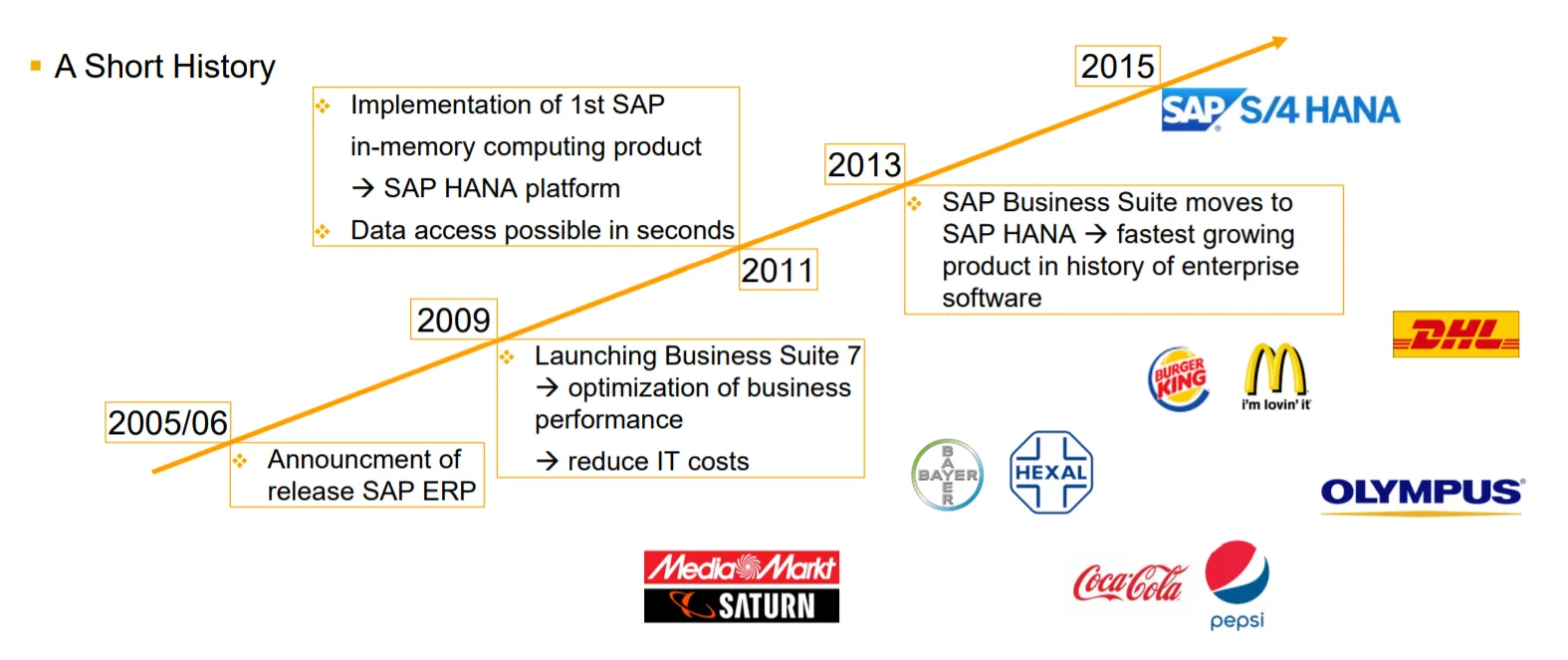
SAP S/4HANA (Simple Suite for HANA) is the latest generation of SAP ERP, built on the SAP HANA in-memory database. Key differences from older SAP versions:
- In-memory processing: Processes billions of records in seconds (no traditional database bottleneck)
- Fiori UX: Modern browser-based user interface replacing the old SAP GUI
- Simplified data model: Eliminated redundant tables — single source of truth
- Embedded analytics: No separate reporting system — analytics built into every transaction
- AI/ML integration: Joule AI copilot and predictive features embedded natively
SAP History
SAP was founded in 1972 by Dietmar Hopp, Klaus Tschira, Hans-Werner Hector, Hasso Plattner, and Claus Wellenreuther — five former IBM engineers based in Waldorf, Germany. What began as a payroll and accounting application for a single IBM client grew into the world's largest enterprise software company over five decades.
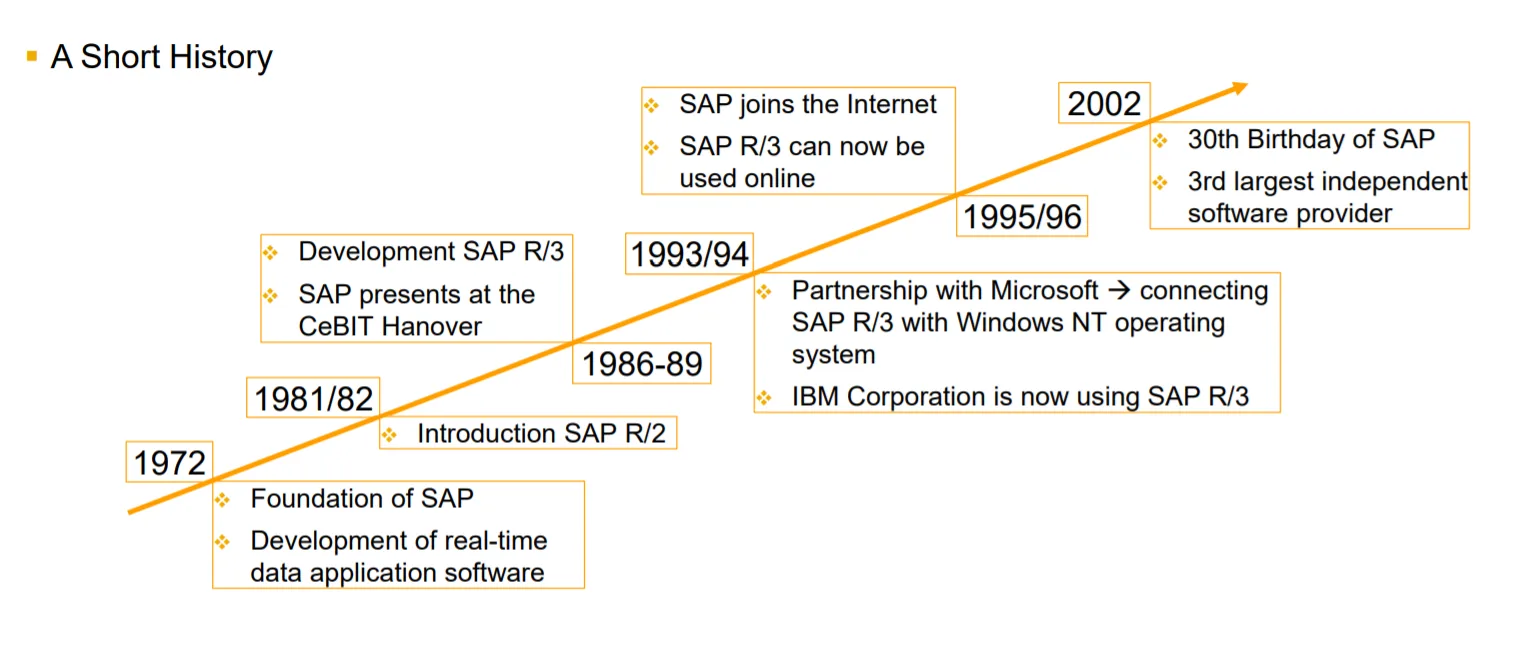
From SAP R/1 in 1972 to SAP R/2 in the 1980s, SAP R/3 in the 1990s, and finally SAP S/4HANA from 2015 onwards, each generation brought transformative improvements in scalability, user experience, and processing power.
SAP Modules Overview
SAP is organized into functional modules, each covering a specific business area:
| Module | Full Name | Business Area |
|---|---|---|
| MM | Materials Management | Procurement & Inventory |
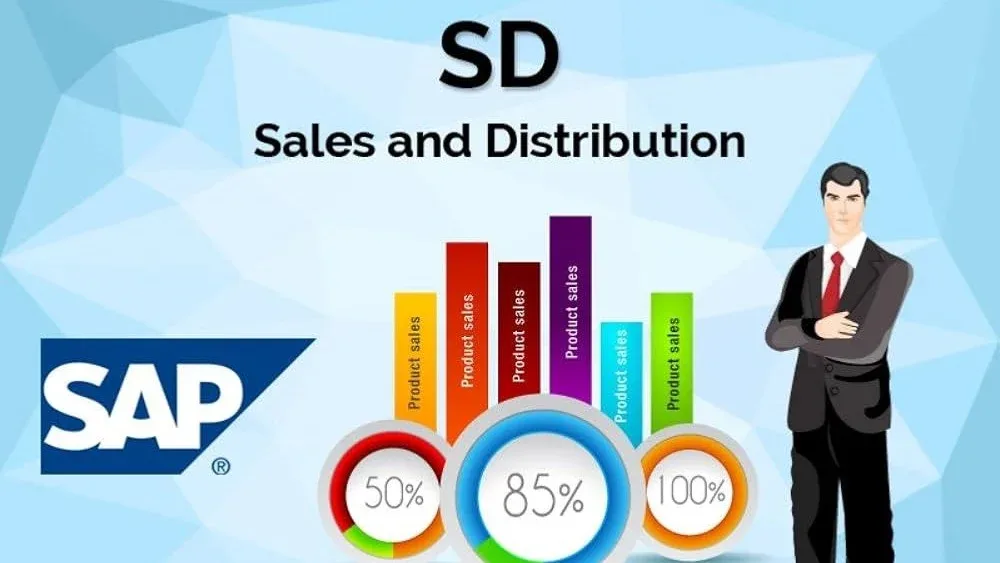
| SD | Sales & Distribution | Sales, Delivery & Billing |
| FI | Financial Accounting | General Ledger, AP, AR |
| CO | Controlling | Cost Centres, Profit Centres |
| HCM | Human Capital Management | HR, Payroll, Recruitment |
| ABAP | Advanced Business Application Programming | Custom Development |
SAP Career Opportunities in India (2026)
SAP is one of the highest-paying technology careers in India. A fresher SAP consultant earns ₹4–6 LPA, while experienced consultants (5+ years) earn ₹15–35 LPA. SAP ABAP developers are consistently among the top 10 most in-demand IT skills on Naukri.com and LinkedIn.
Tech6Sense offers free courses for SAP MM, SD, and ABAP — designed specifically for engineering freshers who want to enter the high-paying SAP ecosystem. Browse our free SAP courses →