What is SAP MM (Materials Management)?
SAP MM is the Materials Management module of SAP ERP. It handles all procurement, inventory management, and material valuation processes in an organization — from creating a purchase request to making a payment to the vendor.
SAP MM is one of the most widely implemented SAP modules because every organization — manufacturing, retail, services — needs to manage procurement and inventory effectively.
SAP MM Organizational Structure
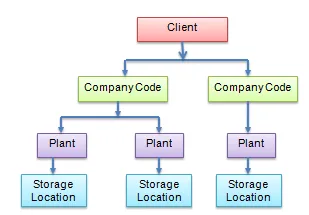
SAP MM operates within a defined organizational hierarchy. Understanding this structure is essential before configuring or using the module:
- Client: The highest level — represents the entire company group (e.g., a conglomerate)
- Company Code: An independent accounting unit — represents a legal entity with its own balance sheet
- Plant: A production facility or branch where materials are produced or stored (e.g., Factory, Warehouse, Regional Office)
- Storage Location: A physical area within a plant where stock is kept (e.g., Raw Material Store, Finished Goods Store)
- Purchasing Organisation: Responsible for negotiating with vendors and creating purchase orders — can be central or plant-specific
- Purchasing Group: A team of buyers within the purchasing organisation responsible for specific material groups
Procure-to-Pay Process in SAP MM
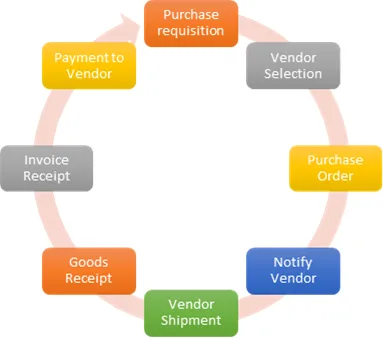
The core SAP MM workflow is the Procure-to-Pay (P2P) cycle — covering every step from a material need being identified to the vendor being paid:
- Purchase Requisition (PR) — Department raises a request for material (T-code: ME51N)
- Request for Quotation (RFQ) — Procurement team requests quotes from vendors (T-code: ME41)
- Quotation / Vendor Comparison — Evaluate and compare vendor quotes (T-code: ME47, ME49)
- Purchase Order (PO) — Official order sent to the selected vendor (T-code: ME21N)
- Goods Receipt (GR) — Goods received and inventory updated (T-code: MIGO)
- Invoice Verification (IR) — Vendor invoice matched to PO and GR (T-code: MIRO)
- Payment — Finance department processes payment to vendor (T-code: F-53 / F110)
Key Master Data in SAP MM
- Vendor Master: Supplier information — payment terms, bank details, address (T-codes: XK01 Create, XK02 Change, XK03 Display)
- Material Master: Product/material information — description, unit of measure, price, storage data (T-codes: MM01 Create, MM02 Change)
- Info Record: Relationship between vendor and material — agreed price, delivery time (T-code: ME11)
- Source List: Approved vendors for a specific material (T-code: ME01)
Inventory Management in SAP MM
SAP MM manages multiple types of stock movements using Movement Types:
- Goods Receipt (Movement Type 101): Stock increases when materials arrive from vendor
- Goods Issue (Movement Type 261): Stock decreases when materials are consumed in production
- Stock Transfer (Movement Type 311/312): Transfer between storage locations within a plant
- Return to Vendor (Movement Type 122): Goods returned to supplier due to quality issues
Important SAP MM Transaction Codes
| T-Code | Description |
|---|---|
| ME51N | Create Purchase Requisition |
| ME21N | Create Purchase Order |
| MIGO | Goods Receipt / Goods Issue |
| MIRO | Invoice Verification |
| MM01 | Create Material Master |
| XK01 | Create Vendor Master |
| ME11 | Create Purchase Info Record |
| MMBE | Stock Overview |
Career & Salary for SAP MM Consultants
SAP MM is one of the most in-demand modules in India. Entry-level SAP MM consultants earn ₹4–6 LPA. With 3–5 years of project experience, compensation reaches ₹12–20 LPA. Companies like TCS, Infosys, Wipro, Accenture, and Capgemini have large SAP MM teams across India.
Learn SAP MM for free with our comprehensive course: SAP MM Complete Course →